Obesity Epidemic – Part II

According to the Mayo Clinic, 70% of Americans take at least one prescription drug, more than half take two, whereas 20% take five or more. The Union of Concerned Scientists site studies predicting for the first time in a century, many children will have a shorter life span than their parents!  It’s time to take our health back.  While researching this topic, the most frequently mentioned culprits were artificial sweeteners, high fructose corn syrup, unhealthy fats, and refined grains, all common in processed foods.

Artificial sweeteners – We can’t “trick” our bodies and just keep eating. When we eat or drink, our body is poised to receive nutrients, when they don’t come the body continues to crave food so we keep eating, then the body quickly converts calories to fat as a survival mechanism.

High fructose corn syrup (HFCS) – Widely studied, this pervasive ingredient has a direct link to weight gain, diabetes II, and heart disease.  This type of sugar confuses the metabolic system in such a way you don’t realize you are full, sugar cravings increase, and calories are efficiently stored as fat. It is inexpensive to produce and highly addictive, consequently everywhere! Consider soda alone; after drinking one 8 oz can of soda a day for one year, 35 pounds of sugar is ingested. Burning off one soda requires running 50 minutes; if 35 pounds of sugar isn’t burned off, it potentially converts to 14.4 lbs. of fat – all in one year.  Now, think about those Big Gulps up to 64 ounces!  Make water your beverage of choice – our best hydrator. Meanwhile, watch for HFCS common in breakfast cereal, cookies, cakes, granola bars, crackers, condiments, salad dressings, canned goods, sauces, cough syrups, and more – Read Food Labels.

Fats – All fats are not created alike.  Our body needs and feels fulfilled when we eat monosaturated and polysaturated healthy fats – salmon, avocados, olive oils and nuts.  We need to eat minimal saturated fats (fried foods, chips, junk food, red meat) and completely stay away from trans-fats and partially hydrogenated oils -French fries, and a common ingredient in packaged goods including cookies, cakes and crackers.

Following a 20 year grain promoting USDA food pyramid stint, in 2011 the MyPlate guide was developed to promote healthier eating. New recommendations are portion control, reduction of salt and sugar, and eating a wide variety of food with your plate proportioned as follows – 40 percent vegetables, 30 percent grains, 20 percent protein, 10 percent fruits and some dairy on the side. Nutritionists voice concern the food industry used its influence to make these new guidelines watered down and confusing.  An independent science advisory panel clearly advised the guidelines recommend eating less meat, cutting down on soft drinks and sugar-sweetened beverages, mention the risk of eating fish high in mercury, and encouraged food sustainability practices; all were ignored.
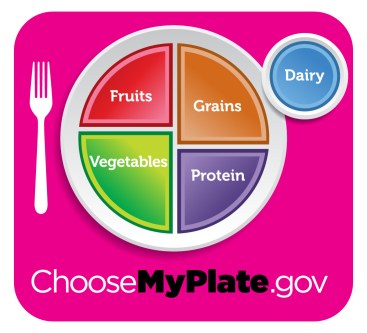
myplate_magenta
http://www.choosemyplate.gov/MyPlate

The Obesity Epidemic

Granted it’s a sensitive topic and almost even taboo to discuss, but I’m going there anyway. When I hear projections such as one in three children will get diabetes in their lifetime unless they get more exercise and improve their diet, it’s time to get the dialogue going loud and clear. Obesity typically leads to multiple health risks including heart disease, stroke, type 2 diabetes and certain types of cancer. Obesity has become a major health issue both diminishing our quality of life and straining our healthcare system.  Some fear the upswing of obesity related diabetes alone will break the bank of our healthcare system.

The Center for Disease Control and Prevention reports one third of US adults are obese, weighing 26 more pounds than they did in 1950. Children and adolescents from ages 2-19 years have a 17% obesity rate.  All rates continue to increase at a quick pace across all ethnic and socioeconomic groups.  A National Institutes of Health report states from 1962 to 2006, obesity in adults more than doubled, from 13.4 percent to over one third.  Another third are overweight.  Since 1975 Americans with diabetes has more than tripled.

Our modern diet filled with processed and fast foods has caused a lot of suffering.   Fortunately, if we take responsibility as individuals, this is a national health problem we can prevent.  How did we get here and what can we do to stop this trend?

With subsidized corn in the 1980s came inexpensive high fructose corn syrup and cheap junk food ingredients flooding the market, making “super-sizing” possible.  Sadly, as taxpayers we pay millions of tax dollars annually to subsidize these practices.  The food industry has gotten really good at manipulating food. They use chemicals to make it taste great, with the right texture, color and smell to keep people over-consuming and craving. By spending billions of dollars advertising, and using appealing packaging, they have created a secure market for their highly profitable products.  Fast foods and chains compete by increasing portion sizes. Our bodies aren’t satisfied when we eat nutrient-deficient food; we overeat as our body signals for more food in search for nutrition.

These days, a typical diet includes larger meals filled with an increasing amount of low nutrient refined grains, red meat, unhealthy fats and sugary drinks along with less fruits, vegetables, whole grains and nuts.  With this high calorie intake has come a more sedentary lifestyle.  Days past, survival required hard physical work; now we have more leisure and enjoy “screen time” – television, computers and smart phones.  To add to the injury, during much of that “screen time” advertisements bombard us encouraging us to keep eating!

This topic is so important and complex, it morphed into a four part series.

Image by – Huffpost Healthy Living, 11/5/13 “So This is Why Children are Craving That Fast Food

Progress on Our Behalf

Sweeping changes are occurring in the food industry, perhaps escaping your notice. It’s encouraging to see changes. As we gain momentum gravitating toward healthier choices, the industry responds. They study our patterns and give us what we want, or rather, “need”. Decisions are made based on our feedback in the way of purchases, phone calls, written comments, and petitions. Maybe they see our nation’s health has declined or perhaps they are responding to our feedback and purchasing patterns and realize it makes good business sense.

WebMD highly recommends avoiding the following seven food additives – food colorings, high fructose corn syrup, aspartame, monosodium glutamate (MSG), sodium benzoate and trans-fats. Recent food industry shifts are focusing on these particular additives. While the level of commitment varies greatly and it’s still not apparent whether all the ambitious time-lines for 2015 have been met, here is progress in the works –

The Aldi Supermarket chain (about 1,400 stores in the US) recently announced by the end of 2015 all their branded products, will be free of synthetic colors, partially hydrogenated oils and MSG.

Taco Bell states by the beginning of 2016, they will remove artificial flavors and colors, added trans fat, high fructose corn syrup, and unsustainable palm oil from its core menu items, introduce aspartame-free diet Pepsi and convert to 100% cage free eggs by the end of 2016. Pizza Hut plans to remove artificial colors and flavors from most of their menu items in 2015. Burger King is committed to converting to cage-free eggs by 2017; whereas, McDonalds and Denny’s plan to convert within a ten year period. Noodle and Company is committed to removing artificial colors, flavors and preservatives from their soups, sauces and dressings by the end of 2015. Panera plans to ditch 150 artificial sweeteners, colors, flavors and preservatives from its menus by the end of 2016. Papa Johns will eliminate all synthetic ingredients from its recipes by the end of 2016, removing corn syrup and preservatives. Subway also plans to make changes over the next 18 months removing artificial colors, flavors, and preservatives from their menu.

Chipotle serves GMO-free tortillas and soybean oil. Kroger, Safeway, Aldi, Cosco, Trader Joes, Whole Foods, and Red Lobster have all stated their commitment to not stock recently Food and Drug Administration (FDA) approved GMO salmon. Sadly against over-whelming public outcry, the FDA approved what many now call “frankenfish”.

Chipotle, Panera and Chick-fil-A all now serve meat raised without antibiotics and McDonalds plans to switch to hormone-free chicken by spring 2016. Milk products are more frequently boasting “hormone free”. The U.S. Centers for Disease Control and Prevention has repeatedly warned about the public health threat of antibiotic resistance due to the overuse of antibiotics in the meat industry.
More good news next week.

Campbell’s announced it will disclose GMO ingredients across their entire product line and are calling for a national, mandatory GMO labeling regimen. Contrary to the chemical’s primary justification against such labeling, they said GMO labeling will not cause food prices to go up. Campbells Soup plans to remove artificial and unhealthy ingredients in all products by mid-2018. Given the Senate recent defeat of the bill dubbed as Deny Americans the Right to Know (DARK) Act, General Mills has stated it’s intention to start labeling GMO products nationwide in preparation for Vermont’s GMO labeling mandate that goes into effect July 1st.

Nestles says it will remove artificial flavoring and colors, including Red 40 and Yellow 5, from all of its chocolate products by the end of 2015 and reduce the sodium content of their frozen pizza and snack products by ten percent. Krafts iconic neon orange macaroni and cheese will take on a new hue with plans to remove Yellow 5 and Yellow 6 by 2016. General Mills is working on removing their artificial color and flavors by 2017. Trix eaters will lose their blue and green crispies! Kelloggs plans to remove artificial colors and flavors from their cereals by 2018.
Schwann Foods plans to remove artificial and unhealthy ingredients from their offerings as well as high-fructose corn syrup by 2017.

Lowes and Home Depot have pledged to phase out neonicotinoid pesticide tainted garden plants, the chemical associated with the decline of bees and other pollinators. Home Depot reports it has removed neonicotinoid pesticides from 80% of their flowering plants, committed to a complete phase-out by 2018, Lowes being 2019. Pop Weaver and Pop Secret are phasing out neonicotinoid seed coatings. As a side note, the U.S. Fish and Wildlife Service announced their plans to ban neonicotinoid insecticide use in all wildlife refuges nationwide by January 2016 and the European Union already has a moratorium on all uses.

The American Journal of Clinical Nutrition reports 61 percent of the food Americans buy is highly processed. Removing some of the harmful chemicals is a step in the right direction, but fact remains a diet based on junk food, fast foods and processed food will always be lacking. Basic combinations of saturated fat, calories, sugar with minimal fiber is never healthy. Studies have shown 80% of the contents in processed foods come from just four ingredients – corn, wheat, soy, and meat. Industry is happy to fill our shelves with those ingredients as farm subsidies have made them inexpensive to produce. While removing harmful chemicals is certainly progress, eating whole foods and unprocessed foods will always remain the healthier option.

National Parks Anniversary

I’m a big fan of March 1, 1872; that was the day the US Congress and President Ulysses S. Grant designated Yellowstone as our first National Park. This land was set aside “as a public park or pleasuring-ground for the benefit and enjoyment of the people” and placed under control by the Secretary of the Interior.  This one action led to a new world-wide trend, now more than 100 countries have set aside some 1200 national parks or preserves.  In 1916 President Woodrow Wilson created the National Park Service to protect 35 national parks and monuments.  In 1933 the National Park Service also assumed stewardship of 56 national monuments and military sites.  Now more than 84 million acres are protected, so much to enjoy!

Continue reading “National Parks Anniversary”

Precious Water

splash
http://www.islamforchristians.com/world-water-day-islamic-perspective/

If you live in the US, remember the wide-spread unrelenting drought of Summer 2012?  That summer, I recall one day they predicted a 90% chance of rain, and it still didn’t rain!  It’s a bit unsettling – 95% of the Scientists have confirmed we are experiencing Climate Change, so extreme weather patterns and droughts will likely become more common.  According to the U.S. Drought Monitor, year 2013 ended with 31% of the contiguous US experiencing moderate to extreme drought.  As droughts become more common, it’ll become more difficult to replenish our current water supplies and our soils become dryer.

Continue reading “Precious Water”

By 2050, there will be more plastic than fish in the world’s oceans, study says

The Washington Post –  January 20, 2016

There is a lot of plastic in the world’s oceans.

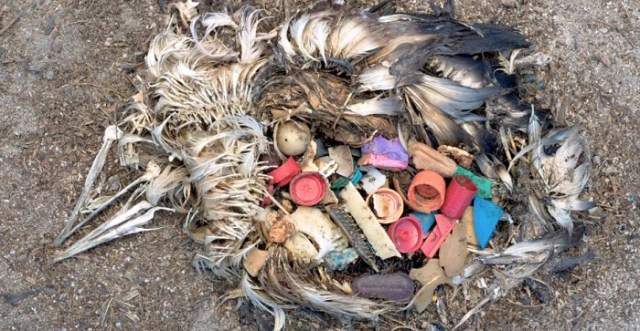
It coagulates into great floating “garbage patches” that cover large swaths of the Pacific. It washes up on urban beaches and remote islands, tossed about in the waves and transported across incredible distances before arriving, unwanted, back on land. It has wound up in the stomachs of more than half the world’s sea turtles and nearly all of its marine birds, studies say. And if it was bagged up and arranged across all of the world’s shorelines, we could build a veritable plastic barricade between ourselves and the sea.

But that quantity pales in comparison with the amount that the World Economic Forum expects will be floating into the oceans by the middle of the century.

If we keep producing (and failing to properly dispose of) plastics at predicted rates, plastics in the ocean will outweigh fish pound for pound in 2050, the nonprofit foundation said in a report Tuesday.

According to the report, worldwide use of plastic has increased 20-fold in the past 50 years, and it is expected to double again in the next 20 years. By 2050, we’ll be making more than three times as much plastic stuff as we did in 2014.

[Nearly all of the world’s seabirds have eaten plastic, study estimates]

Meanwhile, humans do a terrible job of making sure those products are reused or otherwise disposed of: About a third of all plastics produced escape collection systems, only to wind up floating in the sea or the stomach of some unsuspecting bird. That amounts to about 8 million metric tons a year — or, as Jenna Jambeck of the University of Georgia put it to The Washington Post in February, “Five bags filled with plastic for every foot of coastline in the world.”

midway-albatross-2-700x363
http://americablog.com/2013/02/1200-miles-from-civilization-the-albatross-of-midway-are-dying-from-eating-manmade-plastic-video.html

The report came a day before the start of the glitzy annual meeting arranged by the World Economic Forum to discuss the global economy. This year’s meeting in Davos, Switzerland, is centered on what the WEF terms “the fourth industrial revolution” — the boom in high-tech areas like robotics and biotechnology — and its effect on the widening gulf between the wealthy and the world’s poor.

But the plastic situation — fairly low-tech and more than a century old at this point — is a reminder that we still haven’t quite gotten the better of some of the problems left over from the first few “industrial revolutions.”

[‘Microbeads’ soon will be banned from toothpaste and soaps]

According to the report, more than 70 percent of the plastic we produce is either put in a landfill or lost to the world’s waterways and other infrastructure. Plastic production accounts for 6 percent of global oil consumption (a number that will hit 20 percent in 2050) and 1 percent of the global carbon budget (the maximum amount of emissions the world can produce to prevent global temperatures from rising more than 2 degrees Celsius). In 2050, the report says, we’ll be spending 15 percent of our carbon budget on soda bottles, plastic grocery bags and the like.

Once it gets washed into waterways, the damage caused by plastics’ presence costs about $13 billion annually in losses for the tourism, shipping and fishing industries. It disrupts marine ecosystems and threatens food security for people who depend on subsistence fishing.

Besides which, all that plastic in the water isn’t too great for the animals trying to live there.

The data in the report comes from interviews with more than 180 experts and analysis of some 200 studies on “the plastic economy.”

The report was published on the same day that a study came out in the journal Nature Communications asserting that the U.N.’s Food and Agriculture Organization is drastically underestimating the overfishing of the oceans. The study, from researchers Daniel Pauly and Dirk Zeller of the University of British Columbia’s Sea Around Us project, found that global catches between 1950 and 2010 were probably 50 percent higher than previously thought — meaning that damage to the world’s fish stocks was also much worse.

Overall, it was not a good news day for anyone with fins.

But both reports gave some signs for optimism. Pauly and Zeller told The Washington Post that the underestimation of how much humans were fishing means the U.N. also underestimated how much fish the oceans can provide.

“If we rebuild stocks, we can rebuild to more than we thought before,” Pauly said. “Basically, the oceans are more productive than we thought before.”

And the World Economic Forum report, though not quite so sunny, suggests that there are ways to offset all this plastic we’re making and discarding. Countries can implement incentives to collect waste and recycle it, use more efficient or reusable packaging and improve infrastructure so that less trash slips through the system and into the seas.

Sarah Kaplan is a reporter for Morning Mix.""

Plastic Grocery Bags 101

42-18674029
Posted in the Boston Globe By Leon Neyfakh November 25, 2012

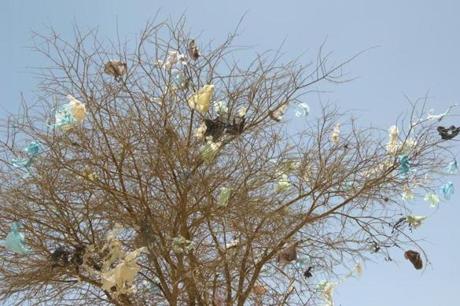
Many of us remember those glorious litter-free days before we became a disposable society.  Now we see single-use low-density polyethylene plastic bags cluttering the landscape snagged on fences and trees everywhere.  First introduced to the US in 1977, by 2012 90% of all groceries were bagged in plastic per the Associated Press.  The Sierra Club estimates 380 billion plastic bags are used in the US every year (1,200 bags per person!) requiring 12 million barrels of oil to produce.

Continue reading “Plastic Grocery Bags 101”

Leave No Trace

“Leave No Trace” educational programs began in the 1960s when hiking, camping & backpacking became so popular public land was being “loved to death”.  Education was needed to minimize their impact.  In the early 70’s, The Boy Scouts of America started advocating Leave No Trace’s seven principals –  “Plan Ahead and Prepare, Travel and Camp on Durable Surfaces, Dispose of Waste Properly, Leave What You Find, Minimize Campfire Impacts, Respect Wildlife, and Be Considerate of Other Visitors”.  National & State Parks, Wilderness Areas, and National Forests have all benefited from these principals.

Continue reading “Leave No Trace”

Love of Hiking

Words always seem to fall short when I attempt to articulate what hiking means to me. Of all leisurely pursuits, hiking has always been my activity of choice. In lone pursuit at a very young age, I continually wandered beyond the boundaries of our farm in pursuit of trees and creeks.  This was no small task as I was surrounded by crops and my legs were much shorter then!  I finally discovered a pristine creek in the woods where I spent hours enthralled with minnow filled pools along with the sounds and sights of water trickling over and through the rocks.  My parents and family weren’t into camping or hiking.  Someway I pursued those adventures anyway – perhaps nature chose me.

Continue reading “Love of Hiking”