One January, we were chilled to the bone so we hit the road, heading south. Always aware of the environment, here are my sightings.
Our Mississippi State Park campground was absolutely beautiful but there were no recycling bins. Anti-litter signs are prevalent – “Pick It Up Mississippi” along roadways and “Adopt-A-Highway America” along the Interstates. It appears these signs are effective, as we didn’t notice much roadside litter. As for local cuisine, I wasn’t much interested in fried chicken on top of waffles, boiled peanuts, or fried pies but I was glad to see the produce stands emerge as we traveled further south. Overall, Mississippi is quite beautiful. Much of the land is sparsely populated and filled with healthy forests. While logging does occur, we didn’t notice clear-cutting scars.
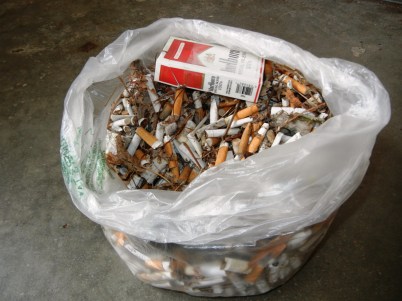
If you pick up litter or notice the sidewalks, streets and yards during your strolls around town, I imagine you agree – Cigarette Butts and cigarette packaging are quite prevalent. Unfortunately, discarded cigarette butts aren’t only unsightly, they are a fire risk and toxic for the environment! The picture above is what I captured after meeting my goal of “1000 Less”!
While I have made a valiant attempt, it seems the more try to I avoid plastics, the more I see. I continually run into situations that seem impossible, but as always, I remain steadfast. Continue reading “Plastics Everywhere!”→
While now the jig is up for the tobacco industry, introducing the concept of “doubt” gave them enough time to secure billions of addicted customers. Documents now prove they knew tobacco caused cancer in the 1950s; in 1960 they realized it caused heart disease and was addictive. Fearful of their findings, they hired a public relations specialist in 1953 who suggested they cast doubt. The hired “independent” pseudo- scientists kept the doubt machine churning. After 50 years of production, in 2012 a Federal judge ruled they lied. Now the four major tobacco companies are paying over 200 billion in settlements, yet they are still spreading misinformation about the dangers of second-hand smoke. The 2006 Surgeon General’s Report clearly states exposure to second-hand smoke causes premature death and disease of non-smokers and no ventilation system eliminates that risk. Fortunately, there is a strong national trend toward restaurants, bars and work sites going smoke-free state-wide; many municipalities in Missouri have smoke-free ordinances. Unfortunately the town where I live, Boonville, lags behind putting our workers, visitors and citizens at risk.
Here are a few of their most valuable winter tips and a few of mine:
Turn down your thermostat to 68 degrees. For every degree you lower your heat in the 60-70 degree range, you’ll save up to 5 percent on heating costs. So lower your thermostat, health permitting, and wear warmer clothes. When leaving home for an extended time, set the temperature back to 55 degrees and while sleeping 60-64 degrees (heat pumps should only be set back 2 degrees to prevent unneeded use of backup strip heating). Close vents in bedrooms and other areas when not in use.
Replace or clean furnace filters as recommended. Dirty filters restrict airflow and increase energy use.
Reduce hot water temperature. Set your water heater to the “normal” setting or 120-degrees Fahrenheit. Savings are 7-11 percent of water heating costs. Wrap older water tanks with jacket insulation, leaving the air intake vent uncovered, for an additional 10% savings. Estimated to be 22% more efficient, we installed a tankless on-demand water heater. When the faucet is turned to hot, water is instantaneously heated by a gas burner or electric element.
Seal up the leaks. Those leaks are easy to find on a windy day. Caulk leaks around windows and doors. Look for gaps where pipes, vents or electrical conduits go through the wall, ceiling or floor. Caulk works best on small gaps. Use Great Stuff or weather stripping for larger gaps and install gaskets behind outlet covers.
Consider replacing your old gas appliances with an ENERGY STAR® water heater or furnace. Check for possible rebates and incentives.
Open your drapes for free heat while the sun is shining; move your sitting furniture to the interior of the room where it is warmer and less drafty; close the damper on traditional fireplaces when not in use; and consider increasing ceiling insulation to R-38 for significant savings and comfort.
Other effective year-round tips –
Keep lights turned off in unoccupied rooms.
Shorten showers for significant savings on water and heating. Install low flow showerheads.
Use appliances efficiently. Fill dishwasher full and skip heat/dry cycle. Fill laundry full, use the cold cycle and keep the dryer lint clean.
Put your computer and monitor to sleep.
Replace incandescent lights with compact fluorescent lights which take 75% less energy or go for even more efficient LED lights.
Install a programmable thermostat.
Don’t let this long list overwhelm you. Just start with a few tips and build on them. In Boonvile, we can review our monthly Ameren usage charts to monitor our progress. Our most recent bill indicates, so far this year we have used 15.2% less electricity and 27.6% less gas than last year! As you take action and see your energy bill decrease, you will be on your path to energy efficiency.
While in Italy, we took a two week excursion into Greece. Here too we found fresh produce abounded, recycling a bit less prominent, feral cats everywhere, and again the wonderful Mediterranean diet with no GMO tainted food – Greek Salads and fluffy Greek yogurt strewn with local honey were our favorites. Small family businesses covered the spectrums of our needs – restaurants, stores, hotels, and more. Diminishing our pleasure a bit, we struggled with second-hand smoke; of all the countries, Greece has the highest smokers per capita. Fortunately, inside dining was customarily smoke-free.
To live is to progress – lucky for us. I think back to the days when I was a poor college student. While I initially worked in the dorm cafeteria on kitchen duty, I chose to better my situation – after all, I was the recipient of several High School typing awards. I was soon hired by the Steno Pool and assigned to various work settings all over campus. Growing up in the country unexposed to smoke, I was in for a rude awakening. Working in an office in the seventies meant exposure to smoke – Lots of it. Everywhere I worked – Jesse Hall, the University Hospital, Engineering School, and University Press – smoke abounded! I was constantly inhaling smoke. And as for my clothes and hair at the end of the day, they were disgusting! Always a hard worker, I stayed focused on my work as my co-workers and/or supervisor took frequent smoke breaks, unfortunately in the same room. Always healthy as a child, I soon experienced my first cluster headaches, then migraines, thus began my history of frequent headaches. Given clerical wages were much higher than kitchen wages, money I sorely needed, I quietly stuck it out as it appeared this was business as usual.
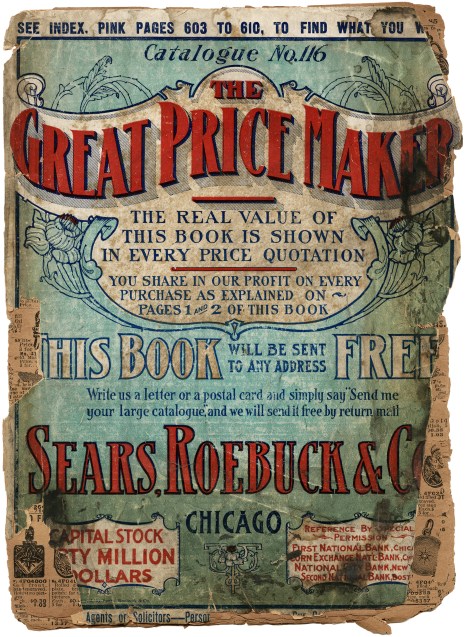
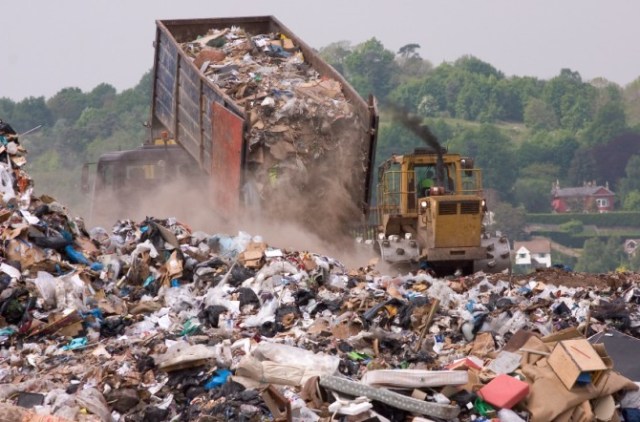
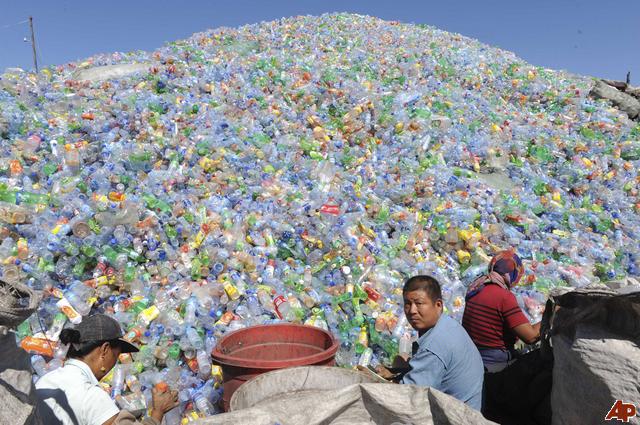
Do you ever wonder how it has all come down to this – Frantic consumption while curbs are overflowing with trash on garbage day? To better understand, I read “Gone Tomorrow – The Hidden Life of Garbage” by Heather Rogers and “Waste and Want – A Social History of Trash” by Susan Strasser and searched the Internet. Here are some interesting tidbits –
During the 17th and 18th century almost nothing was thrown away, reusing and recycling was commonplace practice as it was generally cheaper to reuse items than to buy new ones.
1830s – The poor and “swill” children scavenged the streets for any items of worth. Ragmen worked the streets buying bones, paper, old iron, bottles and rags.
1842 – Estimated 10,000 hogs were on NYC streets. The roaming pigs consumed so much garbage and furnished so much food for the poor that efforts to ban them ran into political opposition.
1866 – Rags were used to make paper. By the late1870s wood pulp was used for newsprint, and prices dropped rapidly. Soon paper was recycled into more paper.
1890s – Articles in magazines focused primarily on germs; cleaning supplies purchases more than doubled between 1900 and 1929.
1895 – In NYC, garbage was hauled to Barren Island where people sorted it and salvaged 60% for reuse.
1900s – As technological innovations and mass production became common, producing goods became easier and cheaper. Heinz and Procter & Gamble were mass-producing and selling packaged products. Middle-class people learned to toss things in the trash, attracted by the convenience and repelled by the association of reuse and recycling with a new class of impoverished scavengers. As the city’s trash system improved, it became easier to throw things away.
In 1902 about 4/5 of cities required some separation of organic garbage or ashes so that these wastes could be recycled or reused. Contractors hired immigrant workers to pick through trash and separate out marketable bones, rags and bottles.
By 1930 – Waste services no longer needed to pay for themselves through salvaged materials. Organic discards were no longer put back into the soil.
1914 – Home Economics Extension Service formed – introduced farm women to new products, labor-saving devices, and provided latest methods instructions.
Late 1920s – Movies, magazines and Radio become major commercial enterprises.
1924 – Kleenex introduced by Kimberly-Clark; “Germ-filled handkerchiefs are a menace to society!”
1929 – The rhetoric of convenience, luxury, and cleanliness was potent; the ideal of the durable and reusable was displaced by aspirations of leisure and luxury, ease and cleanliness.
Flies and Disease: Kill the Fly and Save the Child. An early British public health poster (c.1920)
1930s – Art Deco was introduced; industrial design became a fad among manufacturers.
1933 – The common practice of dumping garbage in the ocean ruled illegal by US Supreme Court.
1930-1940 – Engineers packed earth with trash to reclaim low land; Site of NYC 1939 World’s Fair was built on land filled with trash.
1939-1945 – World War II – Due to a massive material shortage some items were rationed and recycling by participating in scrap drives is considered patriotic. Millions of people donated metals (pots and pans, kettles, ice cream scoops, and hair curlers) and conserved fiber. National Rubber Drives secured tires for the military. Waste fat was collected to make glycerin for explosives. Citizens planted “Victory Gardens to produce food.
Post WW II –After years of deferred gratification, consumers spending increased 60%. Advertisers encouraged people to buy more than one of everything and manufacturers started adding built in obsolescence – Planned failure of materials; functional obsolescence (outdated), style obsolescence. Recycling was largely forgotten.
1950s – Age of paper plates, polyester, fast food, TV dinners, new refrigerators, washing machines, lots of packaging.
1953 – Keep America Beautiful (KAB) was established by the packaging industry. It focused on individual’s bad habits & laws that steered clear of regulating industry. Reducing consumption and mandating reuse was threatening so they switched the focus to litter and recycling. Centerpiece was its great cultural invention – Litter.
1955-1958 Standard Packaging expands and triples sales of discardable trays, boxes, bags, plates, bowls, utensils.
Advertising spending mushroomed from one billion in 1920 to more than 4.5 billion in 1950 & by 1956 almost 10 billion – all to promote consumer spending; Advertising tapped into insecurities – bad breath, body odor. Marketing based on desire, anxiety and envy were highly effective; Advertising connected social status and human value with ability to consume. Sound familiar?
1960 – Plastics became one of the largest industries in the country; Styrofoam emerged as a new disposable.
1970s – Manufactures deployed smoke screen of job losses and economic doom to head off packaging regulations.
1972 – First deposit law in the US, roadside litter down 35% by volume, millions fewer beverage containers were consumed, energy savings, jobs increased, prices stabilized; Later most repealed – Disposables favored by grocery store chains as it saved labor and space.
1976 – Beverage containers fastest growing type of solid waste; Packaging, measured by weight, became the single largest category of municipal solid waste at 34%.
1980s – Curbside recycling systems began.
Late 1980s – An EPA study reports more than 99% of all plastic containers were discarded after only a single use. Americans were throwing away 10 million tons of plastic each year, 25% of all waste by volume.
1981 – Americans held over 6 million garage sales a year, generating nearly a billion dollars, freeing up space for more consumption.
1993 -The EPA reported that domestic recycling had tripled from 7% to almost 22%. Recycling programs are expected to pay for themselves, while solid waste departments are fully funded no matter what. Recycling has long been the enemy of the solid waste industry, stealing volumes otherwise headed for profit making landfills.
2005 – Over 30% of municipal waste is packaging & 40% of that is plastic; Much of America’s discards get shipped overseas for recycling and disposal.
Our population and consumerism has grown exponentially – All at the expense of our Earth and finite natural resources. It seems our appetites are insatiable – exactly what the advertisers and Billionaires want. We are bombarded by ads, stores even open on Thanksgiving vying for the Christmas buck. We all “need” things, I get that. But when it comes to “wants” or simply the desire to shop, maybe try a Second Hand Store or take a nature walk instead! Reduce, Reuse, Recycle!
One thousand less cigarette butts; now our soils, waterways, fish and wildlife will be just a little bit less toxic! Early December, I captured 1000 of these toxic litter bits in my neighborhood in 1 ½ hours, one gallon of butts including six cigarette packages and eight cigar tips. Those butts were generally scattered absolutely everywhere, but at times I did run across clean stretches. No doubt we have some wonderful picker uppers out there already – Many Thanks! And thanks to the person who honked, I’m assuming you were showing your appreciation for my pick-up efforts or my derriere, either way – Thanks!
My haul after 1 1/2 hours.
Four and one half trillion cigarette butts are thrown away every year world-wide, most simply tossed on the ground, our most pervasive litter. Those butts not only diminish the beauty of our town, the toxic accumulation leaches into our soils and waterways poisoning our food chain. A more immediate health threat, they are also mistaken for food by fish, wildlife, pets and even small children. I’m guessing we might have more than our share given Missouri’s horrendously low tax rate of 17 cents per pack, the lowest in the nation. Those butts are made of cellulose acetate, a plastic slow to biodegrade with a filter designed to absorb vapors and chemicals; certainly not something good to have lying around absolutely everywhere!
Here is what I’m thinking; my route only covered around two-thirds of a mile, both sides of the road. We need to all work on this together!
If you want to join the “Cigarette Butt Bust” –
-Grab a small bag and a pair of tight fitting gloves (don’t touch those toxic butts).
-While picking up just focus on your mission – 1000 cigarette butts – Don’t let the bulk and weight of all the other litter distract you. You can grab that later. No need to count the butts, one gallon of butts is your visual target.
-Every 100 butts or so, stand up straight and stretch leaning backwards.
-Be aware of traffic – It’s easy to lose track of your footings while in a dizzy stupor repeatedly bending over.
-Don’t pick up right after you eat a huge bowl of oatmeal, learn from my mistake.
-For those driving by, express your appreciation or maybe stop and help.
-Consider tackling this challenge in increments, my upper leg muscles were sore for days.
-If you have a bad back, grab a kid to pick up with you, or train your dog. For an easier pick up, focus on areas of concentration utilizing a long handled dustpan and broom to sweep up. There are ample toxic piles gracing our streets, parks and parking lots.
-For a larger impact, consider forming a group to tackle larger areas and/or shout out challengers to your friends, neighbors, and city leaders to do the same on your local radio. I’m certainly putting the challenge out community-wide via e-mails, the local newspaper and radio. I plan to announce our results at our Sixth Annual Pick-Up Boonville event March 19, 2016!
– As for smokers, quit flicking those butts! Better yet, quit smoking!
I realize, for many of you, it’s a bit cold out there but warmer days do show up randomly. So go ahead and pick your spot and get started now, or put it on your To Do List. Exercise while contributing to your community! You might choose to pick up along a busy roadway, along your street, walking route, work or church parking lot, or concentrate on one of your local parks or downtown. Wherever you go, no doubt, you will quickly capture 1000 butts. Then challenge someone else to do the same. Many, many thanks in advance! Let’s have a great “Cigarette Butt Bust”!
When we Reduce, Reuse, and Recycle, we naturally reduce our carbon footprint. As a side benefit, we use less energy and natural resources to produce products and keep more money in our pocket. As we reduce, we only buy what we need and avoid expensive single-use, disposable and over-packaged products that crowd our store shelves. We reuse items until we don’t need them, and then pass them on to a friend or thrift shop.
When a product has no more value in its current form, we recycle. Additionally, we all benefit from avoiding products that cause harm to the earth such as Styrofoam, herbicides, pesticides, and preservatives. If we don’t buy these products, they will quit producing them. Don’t let anyone convince you our economy depends on mass production and consumption.
Lifestyle tweaks – Besides Reduce Reuse Recyling, consider walking/cycling/carpooling; Turn off lights when not in the room; Conserve water; Use biodegradable, non-toxic cleaning products; Adjust thermostat a bit.
Purchasing tweaks – Buy recycled products and avoid single use/disposable products. With energy intensive bottled water, water is flown to the factory, energy is used to produce its packaging, and then the bottles are transported to the store.
Housing tweaks – Energy and water efficient appliances; Programmable thermostat; Source to heat and/or solar energy sources; Add insulation and weatherize; On-demand water heater; Replace incandescent bulbs with energy efficient compact fluorescent bulbs, or better yet LED lights; Rainwater catchment, Plant drought tolerant plants; Second-hand furnishings; Water filtering system.
Food tweaks – Buy local produce; Frequent the Farmer’s Market; Buy in season; Plant a garden; Compost; Eat lower on the food chain.
Invest in our future – Evaluate your investments and banking to assure you aren’t supporting carbon emissions; Invest in green energy and divest from fossil fuel companies; Consider purchasing carbon offsets from accredited companies – they invest in renewable energy products or plant trees; Donate to environmental organizations
Meanwhile, we need to elect leaders who will help us reduce our dependence on fossil fuels, and increase our use of clean, renewable energy. We need fuel efficient transportation emitting less carbon pollution and better regulated power plants. We need to increase our energy efficiency, and fund reforestation. The EPA needs to more aggressively enforce our Clean Energy Act and we need leaders who will put our interests over the lobbyists. In turn we will create jobs, save money, cut pollution, and increase food and water stability. Win-Win.







 The Earth and You