Operation Green Fence

There is something satisfying about gathering and sorting our recyclables, then taking them all to our local recycling center where they magically “go away”.  But there is no such thing as “away”.

China started importing scrap in 2001, after joining the World Trade Organization. Soon the bulk of the world’s recyclables went to China; materials such as metal, plastics, textiles, rubber and paper.  In 2012 recyclables became the US number two export to China, second only to soybeans.  According to the International Solid Waste Association, in 2012 China bought 70 percent of the world’s plastic waste exports.  Whereas, the United States sent the bulk of all recyclables including 68 percent of all aluminum scrap, 70 percent recovered paper and 58 percent plastic scraps.

Industry preferred China due to their lower wages and minimal environmental standards. Especially prevalent plastics were sorted, cleaned, and broken down into plastic resin used to make everything from cosmetics to laptop cases and shipped back.  But with those recyclables came trash, mountains of it.  China became the world’s trash dump.  The Chinese citizens became outraged over the noxious air and polluted waterways so in 2013, the government implemented Operation Green Fence.

With China’s new standards, when ships contained recyclables with higher than 1.5 percent contamination, non-compliant import licenses were suspended, and the shipment was rejected and sent back.  This caused a huge industry upset.  Commodity value went down as we accumulated a huge stockpile of recyclables.

Unfortunately, some traders have chosen to continue to sell their lack-luster recyclables to countries with lower standards such as Vietnam, Indonesia and Malaysia.  Once there those countries are saddled with extra trash, then likely sort it and ship it on to China.  Other recycling facilities have built in a second sorting step and send the recyclables on to China or simply keep those valuable resources here.

With these new standards, we have a real opportunity to become innovative and build a strong domestic recycling market in the United States, embracing the value of recyclables instead of shipping it away.  Improved systems will create resources with higher value and keep them away from our landfills.  By creating our own sustainable recycling markets, we will save energy, reduce pollution, create jobs and boost our economy.Here are ways we can help –

Reduce and Reuse First – The thought of empty plastic water bottles traveling all the way to China is mind boggling!

Better Recyclables – Sort your recyclables as requested and don’t drop off soiled containers or trash.

Recycling Dumpsters for Businesses – Support any minimal fees local recycling centers need to charge for the convenience of picking up your recyclables.

Close the Loop – Buy Stuff made out of recycled materials.
Reduce and Reuse in the Kitchen

While recycling is better than sending more trash to the landfills, reducing and reusing first is even better for the environment.  Since most trash and recycling revolves around the kitchen, I’ll focus on that area.

reduce-reuse-and-recycle
http://omiusajpic.org/topics/reduce-reuse-recycle/


Paper products – Inexpensive large bundles of wash cloths can replace most paper towels needs.  I use one to clean the counter and perhaps a spill on the floor (in that order!), throw it in the wash, and then grab a new one from the pile.  Once stained, they go in the rag box.  Use a microwave cover instead of a paper towel.   Cloth napkins easily replace paper napkins.  And it’s fun – find solids or prints in your favorite colors.  If you can’t give up paper products, buy products with a high recycled content.

Food – Certainly growing your own food is best or buying from the local farmer’s market. Composting food scraps is a great boost for the soil and environment.  I’m not a big fan of garbage disposables but that’s better than putting food scraps in the garbage.  Buy wonderful free-range eggs from local producers and return the egg cartons for reuse.

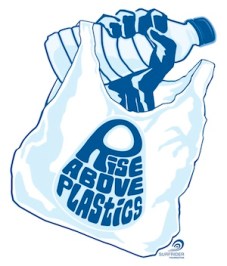
Plastics – When shopping, use cloth grocery bags.  If you are getting just a few items, carry them without a bag.  Several sources say the US goes through 100 billion plastic shopping bags annually and the average American family takes home almost 1,500 plastic shopping bags a year.  It’s time to break that cycle.  I use the few plastic grocery bags I accumulate for picking up litter and encourage you to do the same!!  If there are still bags crowding your drawer, take them to the local Food Bank for food distribution.  Our local recycling facility, Boonslick Industries, currently only recycles #1 and #2 plastics, so I give my #5 plastic tubs (e.g. yogurt, cottage cheese, margarine) to youth groups for art projects or recycle them in Columbia.  Avoid single-use bottled water.  According to “Ban the Bottle”, Americans used 50 billion plastic bottles in 2014 – that’s 167 per American!  Not good.

rap-bottle-and-bag-design-sm
https://centraltexas.surfrider.org/?page_id=102

Food Storage – To minimize using aluminum foil and plastic wrap, store left-overs  and waste-free lunches in Pyrex reusable containers or PBA-free reusable plastic containers.  I store my aluminum foil, plastic wrap and plastic zip-locks in an inconvenient drawer so I think before I grab.  When items store better in zip-locks use them, but wash and reuse them if they still look fairly new.  When leaving food in the bowl, cover leftovers with a plastic bowl cover or “new” shower cap.

Shopping – Shop locally and frequent stores with bulk bins.  If possible, avoid products that are over packaged or packaged in disposable containers.  Single-serve bottled water is expensive, wasteful & bad for the environment.  Instead use a filter pitcher, install a faucet filter to remove trace chemicals and bacteria, or use a bottle with a built-in filter.  I avoid produce packaged in Styrofoam trays and Styrofoam products in general, including “doggie bags”.  While Styrofoam products may appear cheaper than paper products, it’s at the environment’s expense.   The EPA established Styrofoam as the fifth largest source of hazardous waste in 1986 and by volume it now takes up to 25-30% of our landfills and takes over 500 years to decompose.  But I digress – more on that later!  Buy a few cloth bags and remember to use them!!   The Earth Policy Institute reports about 2 million plastic bags are used every minute around the world! Keep cloth bags stashed in your car.  Keep a well stocked kitchen to minimize trips to the grocery store.

Recycling – We have two large tubs designated for our recyclables – one for aluminum/bottles/tin cans and one for our paper products. When the tubs are full, we take to the local recycling center. We also collect other random plastic not recycled locally, although its a bit less well organized.

Other environmentally friendly kitchen ideas –   Energy saving appliances, on-demand water heater and water-filter under the sink, “green” cleaning supplies and turn lights off after leaving a room.

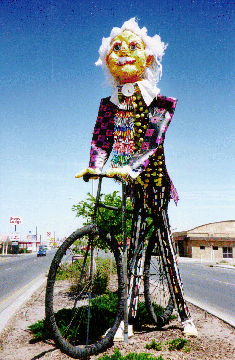
Upcycle – With an expansive Google search, you can find ways to reuse just about everything. I have a wonderful artistic friend, Holly Hughes, who someway manages to combine all kinds of “trash” into art, so I have a box in the pantry where I collect random items for her.

start-half
Holly Hughes, Artist – http://infohost.nmt.edu/~bridge/einstein/start.html

Last Resort – Trash – Before throwing anything away, I ask myself – can I reuse this in some way, can someone else use it, can it be upcycled, is it recyclable?  If every answer is no, it goes in the trash.  Then come trash day, every other week, we only have one small bag of trash on our curbside – A job well done.


550950_329791843761756_1826402527_n
http://www.grosirbajusurabaya.top/plastic-bottle-hanging-garden.html


The Challenge of Living Green

I’ve come to realize, I need to choose my battles wisely.  My quest to live chemical-free can be exhausting!

While cleaning, I no longer mindlessly grab bottles of chemicals that promise to render me a clean surface with ease.  Fortunately I now know how to use vinegar, baking soda, and hydrogen peroxide quite effectively after test-cleaning for months – yes months!

Food is always a work in progress as I continue my research.  I’ve found many foods labeled “Natural” aren’t natural at all.  I avoid single serve, over packaged and disposable products as well as farm raised fish full of hormones.  Since GMO (genetically modified) foods aren’t labeled, I call food producers to inquire.  I also study food growing practices to determine the most important produce to buy organic (check out the Dirty Dozen). I have a small organic garden and frequent Farmer’s Markets.  Next I hit the grocery stores – not just one, several!  I try my best to buy locally first and give the store managers feedback about their offerings.  Then I head to Columbia for more healthy food options.

Considering Styrofoam as the biggest environmental irritant of them all, I don’t budge on this one.   Many times I search for the elusive vegetable or fruit not packaged in Styrofoam trays. Worst yet, I absolutely love coffee, at many community events I sadly turn away as I smell the alluring aroma nestled in Styrofoam cups.  As for take-out foods – many times not an option for me.  If only the Styrofoam price tag reflected its environmental damage – then it would be expensive to produce and not so prevalent.

One would think a stroll through the park would be relaxing but no – I’m generally compelled to pick up litter and “mine” recyclables from the trash bins.  Some days, when I need a break, I don’t bring a bag with me but invariably, I see a plastic bag snagged on a tree somewhere so I’m compelled to fill it up!  As for the dispersed cigarette butts – It takes a “full energy” day and gloves in tow for me to grab those.

Reduce/Reuse/Recycle – I’m always considering these principals.  It may take a little more effort but I always save money while conserving our natural resources and Trash Day is always a breeze!

Yeah, being an Environmentalist isn’t exactly glamorous but we do what we have to do.


http://cateredcrop.com/wp-content/uploads/2014/03/think-green.jpg

Italy Sightings

Although struggling with the carbon footprint of flying, our traveling curiosities won out and we flew to Italy, embarking on our first European travels.

As we travel, our eyes are always wide open, taking in the sights, smells and sounds that surround us.  Viewing the beautiful countryside was quite easy given their extensive train system powered by electricity. While large wheat fields in the plains meet their pasta needs, it appears most of their food comes from small farms and residential neighborhoods as they flourish with produce, vineyards and olive tree groves growing everywhere.  With their tradition of cooking with fresh local food comes wonderful cuisine – the Mediterranean Diet – much to our liking! And it’s GMO free! Like most European countries, Italy has banned GMO (genetically modified organisms) products.  We loved all the fresh produce, pasta, seafood, olives, and pizza, and topped off most meals with a new flavor of Gelato, after all, it has less milk-fat than ice cream!

Remarkably, I didn’t see any Styrofoam (polystyrene) food containers. We were served to-go food in paper sacks or #1 plastic containers and coffee in paper cups. Petrol isn’t subsidized by the government which makes it more expensive; wonder if Styrofoam isn’t used for that reason?  As for grocery bags, I rarely saw reusable cloth bags. Instead single-use plastic bags were rampant in the stores and littered the countryside and waterways.  As for plastic water bottles, they too were rampant.  While dining out, the only water available was bottled water.  Hydration is essential, so I had to lift my plastic-water bottle ban.  As for recycling, public recycling was quite common with ever present co-mingling of trash and we noted ample recycling opportunities for the locals with larger recycling bins along multiple alleyways.  Feral cats fended for themselves everywhere.

We especially enjoyed hiking from village to village along the Cinque Terre National Park mountain pathway overlooking the Mediterranean Sea.  The fertile Tuscany valley and fortress walled cities are stunning, the Amafi Coastal area and architecture in Florence beautiful, the ancient ruins of Rome and Pompeii  thought-provoking, but it was in captivating Venice where we gave pause.  We clearly saw the challenge of this city over 1500 years old, threatened by rising ocean levels from glacier melt and warming ocean thermal expansion of the Northern Adriatic Sea.  Sadly, their recent multi-billion dollar system of floodgates around the city will only delay the inevitable.

Reset, back in Boonville.  After weeks of bone jarring hikes along cobblestone streets and concrete walkways, we are so happy to be back on the Katy Trail.  So happy – we even broke out into a jog!

4-22-15 Orvieto, Italy (2)
Tuscany Small Farms

Microbeads Menace


It’s amazing how one simple tweak in purchases can tremendously help our oceans, and waterways.  Consider our body care products.

http://www.greatlakes.org/microbeads

Microbeads are tiny pieces of spherical plastic used as scrubbing components in hundreds of personal care products including body wash, soap, toothpaste, shaving cream, anti-aging creams, and exfoliating scrubs.  One single product potentially contains thousands of microbeads.  When used as instructed, the product is rubbed on the skin, and then washed down the drain flowing directly into our water sources. Being smaller than one millimeter in size, microbeads easily slip through most water treatment systems.  Once in our marine environment, they accumulate quickly as they are impossible to remove and are not biodegradable.  They join the toxic plastic soup ever present and growing in our waterways.

These microbeads readily enter the food chain as they are tiny and look like food.  Once eaten, they quickly pass on to larger fish and wildlife making their way to the top of the food chain – humans.  As though eating plastic isn’t bad enough, those plastic beads are magnets for accumulate toxic chemicals already in the water, chemicals linked to a broad range of ailments ranging from birth defects to cancer.

Why would industry create such an environmental menace?  Plastic is Cheap.  How to avoid? Sometimes “Microbeads” is listed on the front label, otherwise read the ingredients.  Polyethylene (PE), and polypropylene (PP) are the plastics of choice.  While some products now boast “biodegradable plastics”, that is not a good alternative.  Plastic need high heat and light to biodegrade, conditions not present in a lake or ocean.  Many charts list microbead-containing products to avoid. Fortunately, there are many healthier alternatives available so watch for ingredients like oatmeal, ground nut shells, salt crystals, rice, apricot seeds, cocoa beans, and bamboo.

Many entities are passing legislation phasing out and/or banning microbeads.  Many European countries, Illinois and Michigan attempting to protect the Great Lakes, California, Vermont, and New York have all taken action.  Personal care product companies are also stating their commitment to phase out microbeads including Unilever, The Body Shop, L’Oreal, Colgate-Palmolive and more.  While Johnson & Johnson was initially the leader in this movement, recent findings indicate they found a loop hole and are replacing plastics with plastics.

While avoiding microbeads is a great start, fact remains, personal body care products are filled with harmful chemicals, further damaging our waterways and bodies. A simple Google search will help you identify those unsafe chemicals, but given their prevalence avoiding them is a challenge.  Fortunately, we have a wide range of 100% natural skin care products available locally at Celestial Body, 221 Main St.


The UN Climate Pact (COP21)

It was exhilarating and a bit nerve-wracking, watching the Paris summit unfold as all our world leaders joined together to address climate change.  Speeches abounded stating commitments and encouraging the spirit of cooperation for our common good.  Smaller groups quickly formed working out the details. Soon the climate change deniers arrived on scene attempting to derail the progress and protect their profits.  Fortunately, they were promptly ignored and negotiations continued. Interestingly, the Marshall Island delegates emerged as leaders.  By gathering the voices and faces of many small poor islands struggling with ocean rise and damaging storms, they unified 100 countries vehemently requesting more ambitious global warming limits.  Other contentious issues included how to best secure funds from developed countries to help the disproportionately impacted poor developing countries and how to develop a transparent system to evaluate progress.

On Saturday, December 12, 196 parties adopted an agreement by “consensus”.  All are in agreement we need to limit global warming to 2 degrees Celsius (3.6 degrees Fahrenheit) above preindustrial temperatures with the ultimate goal of 1.5 degrees Celsius (2.7 degrees Fahrenheit); certainly ambitious as we have already reached the 1 degree Celsius mark.  Although not legally binding, developed countries have committed to raise at least $100 billion annually to help undeveloped countries survive. All are in agreement to achieve climate ‘neutrality’ (no net carbon emissions) fossil fuels need to be phased out soon after mid-century, goals which will require keeping 80% of the world’s remaining fossil fuels underground. All countries are legally required to monitor their emission levels and reconvene every five years to publicly report their progress and commit to more ambitious goals. Disappointingly, while world-wide leaders were tirelessly working for the common good, our Congress voted to overturn the Clean Power Plan most Americans support.  With no super-majority to overturn a veto, we will continue to curb coal plant emissions. We have a precedent showing how effective world leaders can be when they come together.  Changes implemented after the 1989 Montreal Protocol effectively brought to a halt the damage caused by the growing hole in the Ozone. Those were the days when it was the norm to believe our scientists.

The United States remains committed to reduce greenhouse gas emissions by 26-28% below its 2005 level by 2025. Many are disappointed these goals won’t cover our fair share as the World Resource Institute reports we are responsible for 14% of the total greenhouse gas emissions.  You can bet other countries are watching us.  Meanwhile, our legislators are out of step, continuing to give the oil industry billions in subsidies annually, our tax dollars, and this month lifted a 40-year ban on crude oil exports.

The leaders from every country in the world, 196 countries, signed the pact.  The world is clearly embracing clean renewable energy as our future and markets are responding.  Technical advances make clean energy renewables more affordable, effective and growing.  Although reversing the course of climate change is a daunting task, the pact brings us hope.  As individuals, our vote, voices, and actions will help keep us on course.

Healthier Consumer Practices

Part 7 – “Story of Stuff” Series

Positive changes are happening all around us.  Farmer’s Markets and organic gardening practices are on the rise.  People are becoming more concerned about chemical exposure electing to make or purchase green cleaning products.

Organics are the fastest growing product in our grocery stores and stores are offering more chemical-free options across many product lines.  Target plans to double organic and sustainable product brands with it’s Made to Matter campaign.  I more frequently see organic food donated to the local food bank.

More products are boasting “less packaging”, “no high fructose corn syrup”, and “non-GMO”.  Nestle USA says they are eliminating artificial flavor and colors from their chocolates by the end of the year – over 250 products and 10 brands.  More paper products have the “Sustainable Forestry Initiatives” label.

Over 60 countries have either banned or limited the use of genetically modified foods (GMO).  The US public is becoming more informed and businesses are hearing our voice – Many stores including Costco, Kroger, Safeway, Trader Joes, Whole Foods, Target say they won’t stock GMO salmon even if it is approved.  McDonalds is converting to hormone-free chicken and milk products.  No doubt, competing companies will quickly follow suit.

And locally, kindred spirits are in motion.  The local Sierra Club is vocal and active.  River stewards from all over the state are involved with Missouri River Relief and thousands of MO Clean Stream teams.  Boonvillians have embraced Pick-Up Boonville activities.

Great strides have been made in the solar industry rolling out more affordable and productive products. Solar panels are producing energy locally – Imhoff Hometown Appliance, our high school, homes and businesses.  Missouri Solar Solution has moved to into town and a Renewable Energy Associates degree is now offered at our State Fair Community College local campus.

Our high school students are becoming informed and speaking up.  An article in a recent student paper insert voiced health concerns about Astroturf exposure and the FCCLA group is involved with Breathe Easy Boonville, speaking on behalf of our workers exposed to second-hand smoke.

Student bodies and other groups are challenging institutions with carbon based investments.  Droughts in California, melting glaciers and rising seas make it harder for skeptics to deny climate change realities. The media is more frequently exposing the damages caused by climate change and carbon based industries while renewable energy technology is improving and becoming more cost competitive.  The recent United Nations Conference on Climate Change (COP21) was successful, 195 world leaders signed a pact to aggressively reduce carbons and shift to clean renewable energy.

As the public becomes more informed, our voices will become louder.  Hopefully we will then elect more forward thinking leaders who have the fortitude and wisdom to focus on the long-term health of our bodies and Earth.  We go to great efforts to feed, clothe, nurture, love and provide for our children and grandchildren; all that effort is for naught if we don’t nurture the very Earth they need to sustain them.

The Story of Stuff Series

Part I – “My Beloved Stuff”

Part 2 – “The Costs of Stuff”

Part 3 – “Bring on the Stuff”

Part 4 – “Stuff Build-Up”

Part 5 – “Stuff Becomes Trash”

Part 6 – “Consumer Treadmill Pause”

Part 7 – “Healthier Consumer Practices”


Consumer Treadmill Pause

Part 6 – “The Story of Stuff” Series

The last five articles I have been talking about Stuff, sharing many aspects discussed in “The Story of Stuff” by Annie Leonard.  While I found reading this book was depressing, especially since I read it during the frenzied holiday shopping season, I regrouped and remain hopeful. Progress is being made all around us.

Although many news sources minimize the damage caused by our consumer-driven economy with scare tactics and spins that make me dizzy, the main-stream media is more frequently encouraging conservative practices, exposing industry damaging practices, and reporting environmental scientific facts people are taking to heart.

The news reports an increasing number of communities and countries banning harmful practices such as Fracking, Tar-Sands, and GMO production. Countries are collaborating about Climate Change issues, although the United States continues to impede progress with limited commitments.  Our voice is becoming louder, exposing Big Business’s attempt to ignore, deny, and censor scientific facts.

Some businesses are already changing production processes as they realize its sound business practice to reuse materials and water instead of disposing them as toxic byproducts.  They are proving a healthy economy doesn’t mean choosing between pollution and progress.  With great strides being made in the renewable energy fields, we are gradually weaning ourselves from harmful carbon-based industries.

Environmental organizations are growing and becoming more influential as our citizens speak up. States and communities are taking a stand banning toxic disposables such as single-use Styrofoam, plastic water bottles and bags.  Some states and cities have managed to hold onto single-use beverage deposit laws, although simply refilling glass bottles makes more sense. While I’d prefer to see more momentum with reducing and reusing, it is encouraging more of our resources are now being captured at recycling facilities and more products made from recycled materials are available.

There has been a resurgence of second hand stores all over the United States filled with shoppers no longer self-conscious buying those goods. Craig’s List and EBay thrive and more people are sharing and borrowing Stuff.  I’ve noticed more communities encouraging their citizens to “Shop Local, Play Local”.  I see more people checking labels, at least attempting to avoid the invasive “Made in China” products.  Each election, more GMO labeling initiatives are on ballots.  More States and cities are adopting smoke-free ordinance, prioritizing our health curtailing second-hand smoke.

To live is to naturally progress, so momentum is on our side.

The Story of Stuff Series

Part I – “My Beloved Stuff”

Part 2 – “The Costs of Stuff”

Part 3 – “Bring on the Stuff”

Part 4 – “Stuff Build-Up”

Part 5 – “Stuff Becomes Trash”

Part 6 – “Consumer Treadmill Pause”

Part 7 – “Healthier Consumer Practices”

Stuff Becomes Trash

Part 5 – “The Story of Stuff” series

“As soon as Stuff enters our homes, it begins the transformation.  We get something and it starts out prominently displayed, then gets moved into a cupboard or onto a shelf, then stuffed in a closet, then thrown in a box in the garage and held there until it becomes garbage.” Annie Leonard “The Story of Stuff”

According to the Environmental Protection Agency, Americans generated an average of 4.6 pounds of trash per person per day, our municipal waste totaling 254 million tons. The EPA estimates one third of the trash is recycled resulting in Co2 reduction equivalent to removing 35 million vehicles from the road. According to United Nations statistics, our waste far surpasses the average – Canadian (1.79 pounds per day), Norwegian (2.3), Japanese (2.58), Australian (2.7 ) and  China only .7 pounds per day!

And this is just part of the story – Compared to 254 million tons of municipal waste, the EPA reports industrial waste is generating 7.6 billion tons a year – waste generated to create our Stuff!

While many of us put a lot of thought in the way we purchase and handle our Stuff, placing a small bag of trash on the curb each week, we still generate a lot of recyclables.  Certainly recycling saves natural resources and energy, but most of our recyclables are downcycled, and lose value.  While recycling is emphasized in our current system, our efforts should be on wasting less from the beginning.

Imagine all the jobs we would create if repairing was prioritized over tossing, then dismantling and reusing components after something is used up. Training and jobs in the science and technology fields would lead the way.  World-wide researchers are already developing solutions introducing Zero Waste initiatives.

Other countries practice “Extended Producer Responsibility” where the company that makes the product or packaging has to deal with it at the end of its lifecycle.  When the responsibility is placed on the producer, their design and marketing approaches reduce the products environmental impact.  They produce better, longer-lasting, less toxic Stuff.

As Annie says “The main waste of resources is the garbage itself.  Behind every piece of garbage is the long history, of extraction in mines, harvesting in forests or fields, production in factories, and extensive ferrying along supply chains.  How ridiculous is it to lock up all those resources underground after spending all that effort to extract and make and distribute them in the first place!”

Although I do still spend time shuffling and cleaning all my stuff, on a good day I don’t acquire more.  On those good days, I have more time to read, enjoy nature, help with various causes true to my heart, write and spend time with my friends and family – Enjoying Life!

The Story of Stuff Series

Part I – “My Beloved Stuff”

Part 2 – “The Costs of Stuff”

Part 3 – “Bring on the Stuff”

Part 4 – “Stuff Build-Up”

Part 5 – “Stuff Becomes Trash”

Part 6 – “Consumer Treadmill Pause”

Part 7 – “Healthier Consumer Practices”

Stuff Build-Up

Part 4 – “The Story of Stuff” Series

Estimates are each US citizen is bombarded with up to three thousand commercial messages a day given all the TV ads (interrupting our shows at a piercing decibel level), billboards, product placement on shows, packaging, computer ads (search engines, newsfeeds, Facebook), radio ads and more.  The average American child sees 110 TV commercials a day.  Some say viewing five additional hours of TV per week will result in spending another thousand a year.

As encouraged, we tend to buy and accumulate Stuff.  Accumulating more Stuff means we need to work more, leaving less time to spend with family and friends. This cycle can lead to feelings of isolation, depression and exhaustion making it easy to decompress in front of the TV where commercials tell people to go shopping, so they do, a vicious cycle Annie Leonard (“Story of Stuff”) calls the “work-watch-spend treadmill”.

Why are advertisements so powerful?  In the 1960s, advertisers enlisted psychologists and neuroscientists to determine the best way to influence shoppers.  They strive to convince consumers they are lacking something so they will buy something to feel better.  More frequently, in lieu of describing the product, they associate it with a desirable image, lifestyle or social status.

During the 1920s and 1930s more consumption was generated by planned obsolescence.  This is when the buyer is convinced to own something a little newer, better, or sooner than necessary.  The quicker products are thrown away and replaced, the better.  Appliances and electronics were priced in such a way they were cheaper to replace.  With instant obsolescence comes disposable goods and with perceived obsolescence comes changing fashions and styles.

Seductive advertising, easy credit, obsolescence, keeping the public ignorant about the hazards of thousands of chemicals in the interest of “progress”, and keeping people watching TV and so busy working they don’t notice what’s going on all contributes to the accumulation of Stuff.

In the United States our standard measure of success is the gross domestic product, or GDP.  Our goal is simply growth, above all else, with no concern about unequal or unfair distribution of wealth or if our citizens are happy and satisfied.  Annie Leonard reports North American and Western Europe, 12% of the population, consume 60% of the goods, whereas one third of the world population consumes only 3.2 percent. Developing countries strive to consume just like us, whereas poorer countries “need” to consume more.  Global Footprint Network calculates we are already annually consuming 1.4 times what the earth generates in a year.  That means we are using up Stuff future generations will need!

The Story of Stuff Series

Part I – “My Beloved Stuff”

Part 2 – “The Costs of Stuff”

Part 3 – “Bring on the Stuff”

Part 4 – “Stuff Build-Up”

Part 5 – “Stuff Becomes Trash”

Part 6 – “Consumer Treadmill Pause”

Part 7 – “Healthier Consumer Practices”